Electric Bikes for Commuting
The Complete 2026 Guide
Whether you're evaluating whether e-bike commuting is even worth it, choosing a specific bike, or figuring out how to actually make it work five days a week — this guide covers all three. Cost savings, motor matching, route planning, rain riding, security, and our top picks.
- The #1 Objection — "Won't I Arrive Sweating?"
- Is E-Bike Commuting Worth It? The Numbers
- 6 Factors That Actually Matter When Choosing
- Choosing Your Bike by Commute Distance
- Planning Your Route Before You Buy
- Riding in Rain and Bad Weather
- E-Bike Security — Protecting Your Investment
- The Commuter Routine — Making It Stick
- Our Top Commuter E-Bike Picks
- Frequently Asked Questions
The Commuter's Objection — "Won't I Arrive at Work Sweating?"
This is the question that stops more people from trying e-bike commuting than any spec concern. The answer is: no, not if you use pedal assist correctly.
The motor compensates for effort proportionally. On hills, the motor works harder so you don't have to. Into headwinds, same. At traffic light acceleration, same. Most commuters on routes under 10 miles arrive no sweatier than someone who walked briskly from a car park to the office. The trip feels like a choice — a pleasant, efficient, outdoor commute — not forced exercise.
The qualifier: for hilly routes over 10 miles in summer heat, wear lighter cycling clothes and use a higher assist level. Some commuters keep a change of shirt at work. But for the vast majority of urban commuters, this objection disappears after the first week of riding.
Riders consistently describe e-bike commuting the same way: you arrive fresh, you skip parking stress, and the trip genuinely feels like the best part of your day rather than a chore. See our hilly cities guide for specific motor advice if your route involves significant grades.
Is E-Bike Commuting Actually Worth It? The Numbers
The True Cost of Car Commuting in 2026
AAA estimates the average American spends over $12,000/year on total car ownership. For a city commuter driving 10 miles each way 5 days a week:
The True Cost of E-Bike Commuting
A $1,000 e-bike saving $3,000/year in parking and fuel pays for itself in 4 months. Even a conservative $1,500/year parking saving pays back a $1,200 bike in 10 months. Most urban commuters who make the switch don't go back.
Choosing the Right E-Bike for Your Commute — 6 Factors That Actually Matter
1. Motor — Match It to Your Specific Route
For flat city commuting (Long Beach, Tucson, Mesa, Bakersfield, Decatur): a 350–500W hub motor is genuinely sufficient. For hilly city commuting (Birmingham, Flagstaff, Fayetteville, Oakland hills): mid-drive or 750W+ hub with strong torque is recommended. For a detailed breakdown, see our complete hilly cities guide.
For smooth urban acceleration at traffic lights: a 48V system delivers more torque at low speed than a 36V system, handling starts and bridges without the battery drain you'd expect. A torque-sensor pedal assist also extends range about 20% compared to cadence-sensor bikes by matching output to actual effort.
2. Battery Range — The 1.5× Rule
Real-world range is typically 60–70% of published figures accounting for hills, headwinds, cold weather, and assist level. Rule: your battery should comfortably cover at least 1.5× your round-trip commute distance.
Examples: 8-mile round trip → you need 12+ real-world miles → a bike rated 20 miles at full range. 20-mile round trip → 30+ real-world miles needed → 400–500Wh battery minimum. 35-mile round trip on hilly route → 52+ miles needed at moderate terrain rating → 600Wh+ battery essential. See our range guide for the full Wh calculation.
3. Comfort — The Factor That Determines Whether You Actually Ride
Comfort is the single biggest factor in whether a commuter actually rides their e-bike consistently over time. An upright riding position, ergonomic grips, a suspension seatpost or front fork, and a step-through frame for city stop-start riding together determine whether the bike is enjoyable for five days a week — or only on weekends.
A hunched position works for 30-minute recreational rides. At five days a week, 52 weeks a year, it wears on the lower back, wrists, and neck. Don't choose a performance geometry bike for an upright commute just because the specs look better.
4. Commuter-Essential Features — What Must Be There Out of the Box
These aren't optional upgrades — they're the difference between a bike that works as a daily driver and one that constantly requires workarounds:
- ✓Rear rack — carries bags, groceries, laptop. Without it you're carrying a backpack every day.
- ✓Full fenders — essential for rain riding; also prevents road grime on work clothes.
- ✓Integrated lights (battery-powered) — you'll never forget to charge them separately.
- ✓Kickstand — urban environments need fast mounting and dismounting without leaning anything against walls.
- ✓Hydraulic disc brakes — consistent in all weather; critical for UK riders and wet-climate commuters.
- ✓UL 2849 certification — required for indoor charging in many apartment buildings and offices.
5. Weight and Portability — Matters More Than Specs for Many Riders
For pure door-to-door commuters: under 55 lbs is manageable. For transit riders (bike + train): under 45 lbs is much preferred; folding bikes under 40 lbs are the practical choice. A 70 lb e-bike might be excellent on a trail but hauling it up stairs in a walkup apartment every night makes the commute feel like a punishment.
For multi-modal commuters: BART (Oakland), London Tube (folding bikes permitted), Sydney Trains — all have folding bike policies. A lightweight folding e-bike + transit combination is often the fastest door-to-door route in dense urban areas.
6. UL 2849 Certification — Non-Negotiable in 2026
UL 2849 tests the entire electrical system — motor, battery, and charger — for fire, shock, and overload hazards. California and New York now require it for new e-bike sales. For apartment and office building commuters, UL 2849 is increasingly required for indoor charging access. It's also the standard that prevents the battery fire incidents that make the news. Non-negotiable in 2026.
UK note: Private electric scooters remain illegal on UK public roads as of 2026 — e-bikes (EAPC compliant: 250W max, 15.5 mph assist limit) are the legal active commuting option. If you're comparing the two, see our e-bike vs scooter guide.
Choosing Your Commuter E-Bike by Distance
The Multi-Modal Commute — E-Bike + Transit
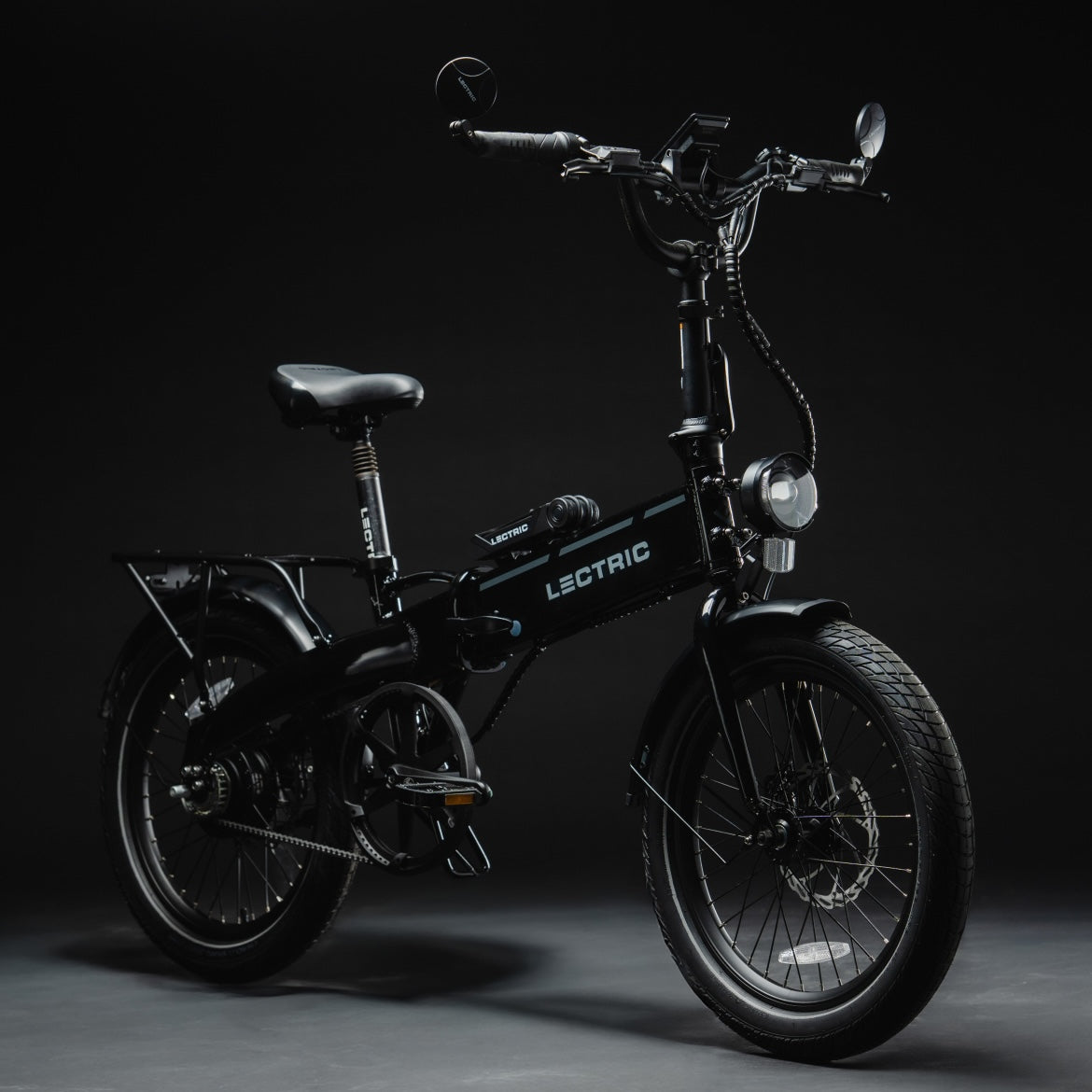
For many urban commuters, the fastest door-to-door option is: ride 2–4 miles to the station, fold the bike, take transit, unfold and ride the last mile. This requires a folding e-bike under 40 lbs. The Lectric XP Lite2 at 41 lbs (33 lbs without battery) is the strongest option in EBikesCompany's range for transit compatibility.
Planning Your Commute Route — Before You Buy
The step nobody writes about — and the one that prevents the most buyer regret.
Riding in Rain and Bad Weather — The Commuter Reality
Missing from virtually every competitor commuter guide. Essential for UK, Pacific Northwest, and four-season US city riders.
What the IP rating means in practice: most commuter e-bikes are IPX4 (splash resistant) to IPX6 (heavy rain resistant). This covers normal commuting rain — not submerging the bike in puddles.
- ✓Hydraulic disc brakes are not optional in the UK — mechanical disc brakes lose 30–50% stopping efficiency in heavy rain; hydraulic disc brakes maintain consistent feel in all conditions.
- ✓Full-coverage fenders prevent road spray from soaking you from below — standard fenders miss the mid-frame splash; SKS-style extended mudguards are the commuter standard.
- ✓Waterproof cycling overpants and jacket — cycling-specific (allow leg movement) rather than general outdoor gear. Waterproof shoe covers for extended wet commutes.
- ✓Dry all connectors after wet rides — particularly the battery charging port, display connectors, and motor junction. Pat dry before plugging in for charging.
- ✓Never ride through standing water deeper than 3–4 inches regardless of IP rating. Wheel spray into unsealed gaps is one thing; partial submersion is another entirely.
IP ratings are tested under controlled laboratory conditions with specific water flow rates and angles. Real-world rain is unpredictable. IPX4/6 means your bike handles commuting rain reliably — it does not mean it's waterproof. Treat it as splash-resistant, not submersible.
E-Bike Security — Protecting Your Commuter Investment
The post-purchase concern that stops people from leaving their bike outside. Addressed properly, it's manageable.
The Two-Lock Strategy
Use two different lock types simultaneously. This defeats the vast majority of opportunistic theft — most thieves carry one tool type. Standard combination:
- ✓U-lock through the frame and rear wheel to a fixed anchor (rated minimum SOLD Secure Silver)
- ✓Chain or folding lock through the front wheel and back to the anchor or frame
- ✓Always lock through the frame — not just the wheel (a wheel-only lock leaves the frame easy to remove)
- ✓Lock to something genuinely immovable — not a removable bollard or temporary sign post
Indoor Storage and GPS Tracking
Indoor storage is always preferable when available — most e-bike theft is opportunistic from outdoor racks. If your workplace or building has a bike room, use it. For high-theft urban areas, a hidden GPS tracker ($30–$80) adds meaningful recovery capability. E-bike insurance (Velosurance in the US, Bikmo in the UK) typically costs $10–$25/month for a $1,000–$1,500 bike — worth it in cities with higher theft rates.
Your Commuter E-Bike Routine — Making It Actually Stick
The behavioural section nobody writes. The first month is when new e-bike commuters either lock in the habit or revert to the car. These steps make the difference.
Best Commuter E-Bikes at EBikesCompany — Our Top Picks



Frequently Asked Questions
Are electric bikes good for commuting?+
Excellent — if chosen correctly for your route. E-bikes eliminate parking stress, avoid traffic jams for distances under 10 miles, cost a fraction of car commuting annually, and most riders arrive no sweatier than someone who walked briskly from a car park. The key is matching motor type and battery size to your specific route's distance and terrain.
How far can you commute on an electric bike?+
Most quality commuter e-bikes offer 25–50 miles real-world range (60–70% of advertised figures on moderate terrain). For most urban commutes under 15 miles round-trip, any 400Wh+ battery is sufficient. For longer commutes or hilly routes, 500–700Wh ensures you arrive with charge to spare. Rule: battery should cover at least 1.5× your full round-trip distance.
Will I arrive at work sweaty on an electric bike?+
Most commuters on routes under 10 miles arrive comfortably without significant sweating when using pedal assist correctly. The motor does the heavy work — hills, headwinds, and accelerating from stops — leaving you to cruise with light effort. For longer or hilly commutes in hot weather, wearing lighter clothing and using a higher assist level reduces exertion further.
What is the best electric bike for commuting to work?+
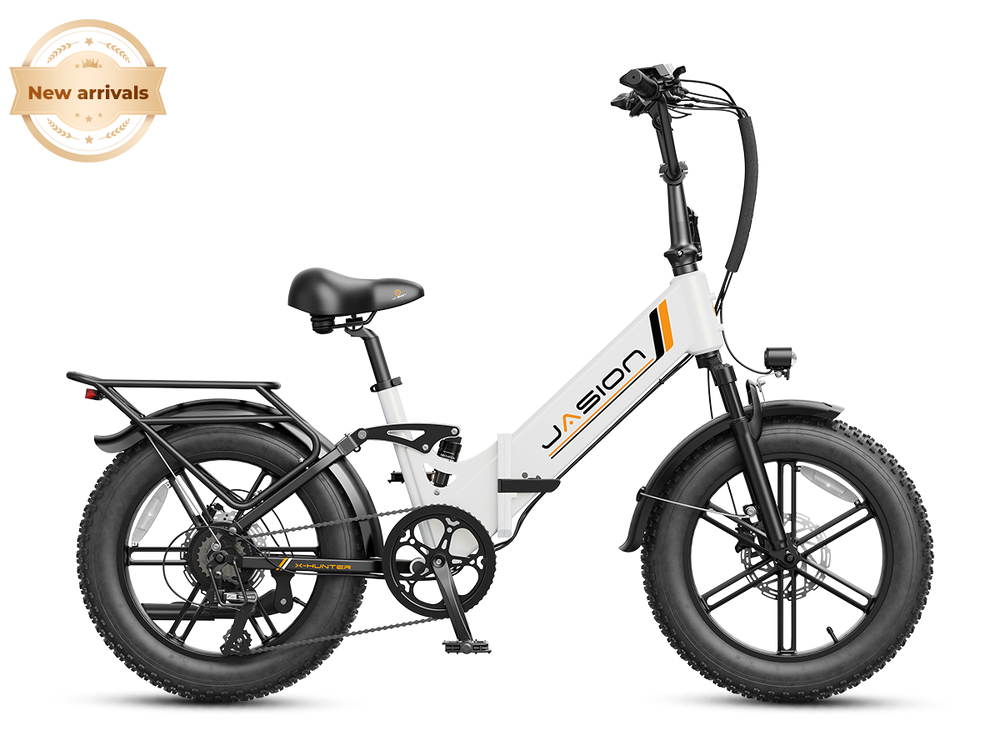
For most flat-city commuters: the KOOLUX X1 (folding, lightweight, affordable) or DUOTTS C29 (750W, 720Wh, 62-mile range). For hilly city commuters: the Jasion X-Hunter ST (85Nm, 750W, step-through frame) or Aipas M2 Pro (110Nm, 1800W). For transit riders who need to fold: the Lectric XP Lite2 (41 lbs, 80-mile range, Gates belt drive). See our full commuter picks section above.
Is it worth buying an electric bike for commuting?+
For most urban commuters, yes — within the first 1–2 years. Annual car commuting costs average $1,800–$4,800 above the e-bike threshold (parking + fuel + insurance differential). E-bike annual running costs: $250–$500. Net saving: $1,300–$4,300/year depending on city and parking situation. Most e-bikes pay for themselves within 12–24 months for urban commuters who replace car trips.
How much do you save commuting by electric bike?+
A realistic conservative estimate for a 10-mile round-trip city commuter: parking savings $100–$300/month; fuel savings ~$50/month; total $1,800–$4,200/year. E-bike annual cost (amortised bike cost + electricity + maintenance): $250–$500/year. Net saving: $1,300–$3,700/year. The higher end applies in cities with expensive parking (San Francisco, New York, Boston).
Can you ride an e-bike to work in the rain?+
Yes — most quality commuter e-bikes are IPX4 to IPX6 rated (splash to heavy rain resistant). For UK riders and Pacific Northwest commuters this is a practical necessity. Use hydraulic disc brakes (essential in wet conditions), wear waterproof cycling overpants and jacket, fit full-coverage fenders, and avoid riding through standing water deeper than 3–4 inches regardless of IP rating.
Do I need a licence to ride an electric bike to work?+
In most US states, no — Class 1, 2, and 3 e-bikes don't require a licence, registration, or insurance. New Jersey introduced licensing requirements in January 2026 (compliance deadline July 2026). In the UK, e-bikes that meet EAPC rules (250W max, 15.5 mph assist limit) need no licence. Private e-scooters remain illegal on UK public roads — e-bikes are the legal commuting option. See our US e-bike laws guide.
What class e-bike is best for commuting?+
Class 1 (pedal assist, 20 mph) offers the broadest access to bike paths and trails. Class 2 (throttle, 20 mph) adds convenience at traffic lights and starts. Class 3 (28 mph) is best for longer road commutes where speed matters — but is restricted from most bike paths. For most urban commuters, Class 1 or 2 is the practical choice; Class 3 for dedicated road commuters on longer routes.
How do I secure my e-bike at work?+
Two-lock strategy: U-lock through the frame and rear wheel to a fixed anchor point; plus a chain or folding lock through the front wheel. Always lock to something immovable. Indoor storage is strongly preferred when available. Consider a hidden GPS tracker ($30–$80) for high-theft urban areas. E-bike insurance (Velosurance US, Bikmo UK) costs $10–$25/month and covers theft plus damage.
How long does an e-bike battery last for commuting?+
A 10-mile round-trip commute at moderate assist uses roughly 10–15% of a 500Wh battery per day — meaning you charge every 5–8 working days under normal use. Daily charging to 100% is not recommended; charge to 80% for daily commuting to maximise battery lifespan. See our battery lifespan guide for charge cycle and replacement cost detail.
What should I look for in a commuter electric bike?+
Six non-negotiables: (1) Motor matched to your route terrain. (2) Battery 1.5× your round-trip range. (3) Upright comfortable geometry for daily riding. (4) Commuter features: rear rack, fenders, kickstand, integrated lights. (5) Weight under 55 lbs (under 40 lbs if you need to carry it). (6) UL 2849 certification for safe indoor charging. Everything else is preference.
Start Your Commute — Shop at EBikesCompany
All commuter bikes in stock. Ships from US, UK & AU warehouses in 3–8 days. Questions about which bike suits your route? WhatsApp us for honest advice.
Questions? WhatsApp us
📚 More from the Blog▾
More Reading
All articles →Essential reading for every e-bike rider.
Essential reading for every e-bike rider.
Essential reading for every e-bike rider.